Vos Voco
- Title: Developer
- Website: https://vosvoco.com/
Company
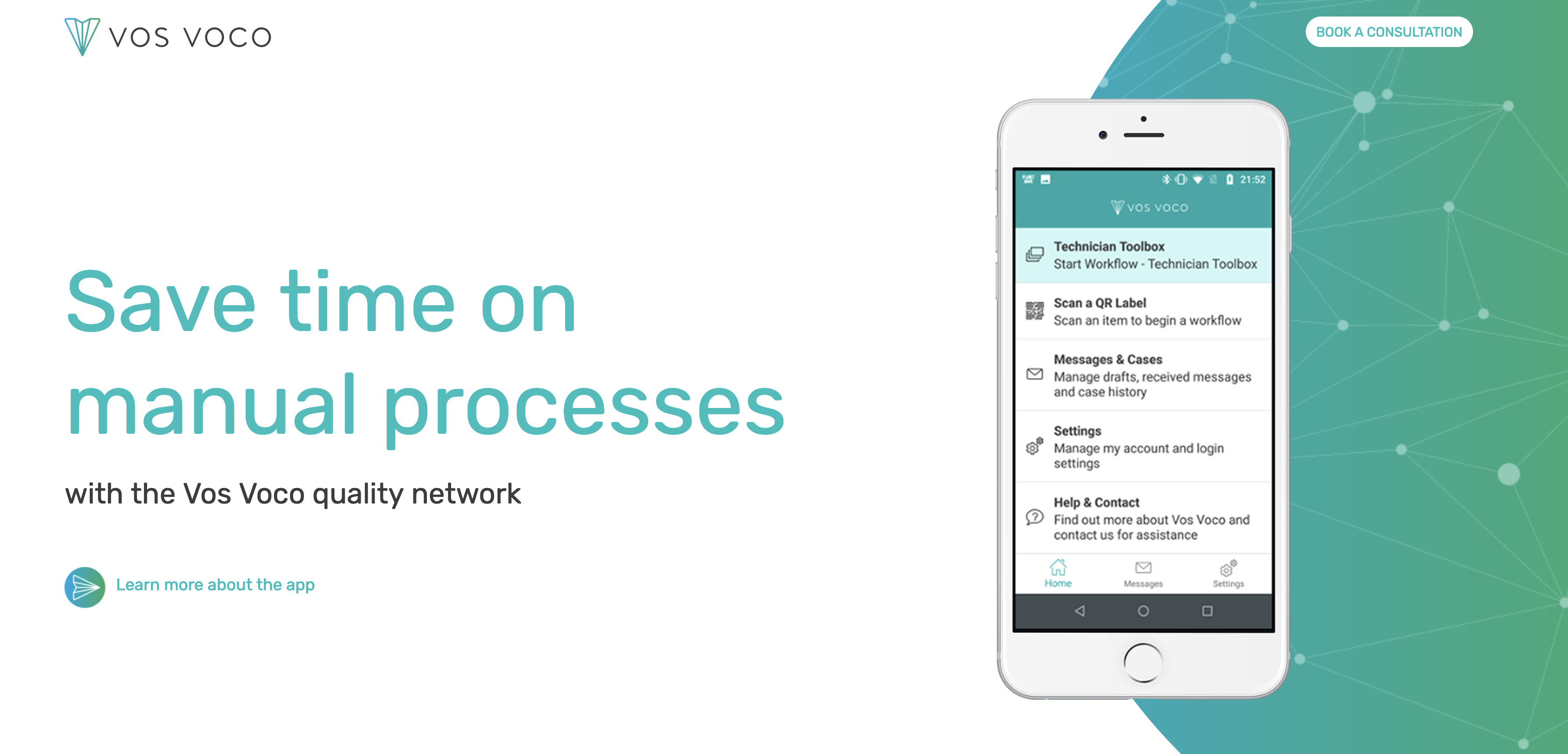
Vos Voco offers an app-based service designed to automate workflow processes, enhancing efficiency and communication within and between organizations.
Team
I served as the sole full-stack developer, responsible for maintaining, modernizing, and enhancing the website. An additional app developer managed the app-related aspects of the platform.
Challenge
I was initially engaged to maintain and stabilise the existing website and API. At that point the platform was deployed to a single EC2 instance and releases were carried out largely through manual processes. Local development was difficult and changes carried operational risk.
After reviewing the platform, I recommended and implemented a modernisation programme focused on containerisation, automated deployment, and establishing baseline automated testing. This provided a more reliable foundation for day-to-day operation and future feature development.
Containerisation & Deployment: I containerised both the Ruby API and Vue.js front-end, migrated the platform to AWS Fargate using Terraform for infrastructure-as-code, and introduced CI/CD via AWS CodePipeline and GitHub Actions. This ensured consistent, repeatable, and safer deployments.
Automated Testing & Upgrades: A baseline automated unit test suite was introduced, allowing the Ruby runtime and a number of legacy libraries to be safely upgraded, reducing technical debt and maintenance risk.
Over the following years the platform was maintained with limited functional change. As requirements evolved, the codebase had begun to fall significantly behind modern standards, and extending it further would have required considerable engineering effort. I was therefore asked to evaluate options for a broader re-architecture.
Following a detailed technical and cost analysis, I proposed a workflow-driven architecture designed to simplify the platform and reduce both development and operational costs. The proposed solution centred on n8n for workflow orchestration, SurveyJS for the web interface, a React Native mobile application, and a lightweight Node.js wrapper service for secure workflow execution. DynamoDB was proposed for storing core entities and operational state, with MongoDB used for reporting and analytics. The design significantly reduced the reliance on bespoke application code while retaining flexibility for future product growth.
Results
The initial modernisation programme stabilised the platform, introduced automated deployments, and reduced operational and release risk. Development became more predictable, and the engineering team gained greater confidence in the reliability of the website and API.
The later architecture review provided a clear and pragmatic path forward for the platform. By shifting to a workflow-driven solution built on tools such as n8n and SurveyJS, the business is now able to deliver new functionality with far less custom engineering effort. The proposed design simplifies the overall technology stack, reduces long-term maintenance burden, and lowers both development and running costs while retaining flexibility for future product evolution.